From the Publisher …
Jon Angell
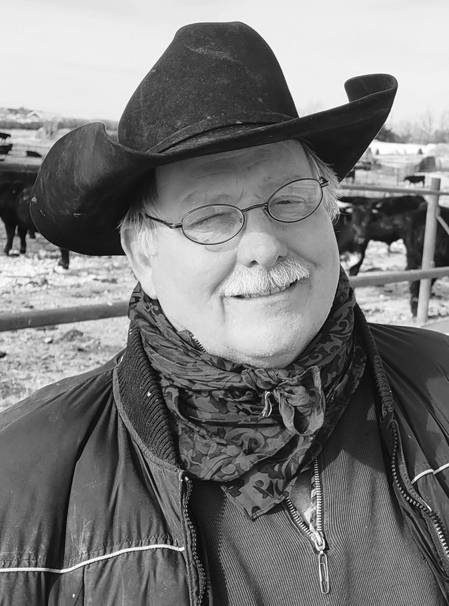
Up front this month, I decided to go with another story written by Colleen Schreiber and LivestockWeekly. It is filled with interesting quotes and simple tales of a long life. I can look at the accompanying photo and tell this would be a feed store that I would enjoy visiting.
Below the fold on the front, an Amish-led company stepping up to acquire an ongoing processing plant to vertically expand struck me as a bold move in a challenging time. I’ve seen my Amish neighbors quietly and successfully tackle many avenues of business. I’m not sure why this particular news item strikes me as odd. Maybe because I see the packing business as such a regulated and volatile business with so many modern demands. This news item was short on a few key details. I will be looking to see how this continues to evolve.
In the last several weeks, we have experienced a lot of volatility across the world and specifically much of our economy. It doesn’t matter where you choose to look, there is a lot of uncertainty. Interest rates, inflation rates, employment rates, import rates, heifer retention rates, energy rates, etc., etc., …
My theory for this evolves around the fact that maintaining the status quo in nearly every area is rapidly being disrupted. Why so? Because much of what the status quo had become is corrupted/broken. Additionally, with the reach and speed of modern society, with the internet, artificial intelligence among other things, allows disruption and creative destruction to come swiftly.
Along the same lines of thinking about the mass disruption happening is how getting reliable information is challenging. It seems that gossip, rumor, misinforma-tion, and even malicious information is so easily spread and hard to distinguish.
To a certain extent, this makes me opine for a simpler time. This probably is why I am attracted to real physical books and stories like our feature printed on real paper instead of a screen, or read to me in a computer-generated voice. Ugh….
It is all very hard to keep up with. Tighten your safety belts and hang on because in the next several years, I believe that things could “get pretty western.” Sure there is plenty of opportunity ahead, but I don’t see many obvious paths and plenty of pitfalls.
It reminds me of the old Chinese curse: “May you live in interesting times.” Well, if nothing else is that!
Elsewhere, we have several regular columns that of course have some good stuff. I am still working towards sharing a wide spectrum of insights and opinions. I think we were successful in this regard as it is obvious in some of their stated opinions they are polor opposite of some others in a subsequent page.
Carolyn Allen’s column is of course a local history win.
Charlotte’s recipe is often read, but I’m not sure how many have actually prepared her recipes. Well, this month I’m calling on all you cooks that are reading to fix the recipe, and send in a photo, possibly win a prize. Get your creativity going! It could be fun. It could be profitable. But at least you can enjoy a tasty meal.
Numerous annual production sales are being held now. We have several who have graciously placed advertising with us. Our trade territory is blessed with a good variety of high-quality opportunities to advance the genetics of our local herds. Buying bulls or selecting a few newer model females for a herd can have long-term impacts.
If you are in need of bulls or maybe a few females, consider these producers, attend their sales and open houses – the experience and exposure is often beneficial whether you make a winning bid or not. While you are there, it’s okay to tell them you, “saw it in The Cattleman’sAdvocate.”
We have plenty to offer in this issue. As I have said recently in these pages, I am working to refresh and shore up our efforts with this publication. Like everyone else, we are dealing with plenty of our own disruptions. I’m still confident that we are providing a useful product to our customers and friends and I am excited to try a few new things, while still hopefully retaining the qualities and features that have sustained our efforts for so many years. To you the reader, and all the advertisers: Thank you for your support.
Send questions, story ideas, criticism, encouragement to:
Jon Angell
Publisher CA
PO Box C
Centralia MO 65240